Last verified: April 2026
The First Crop: 1775
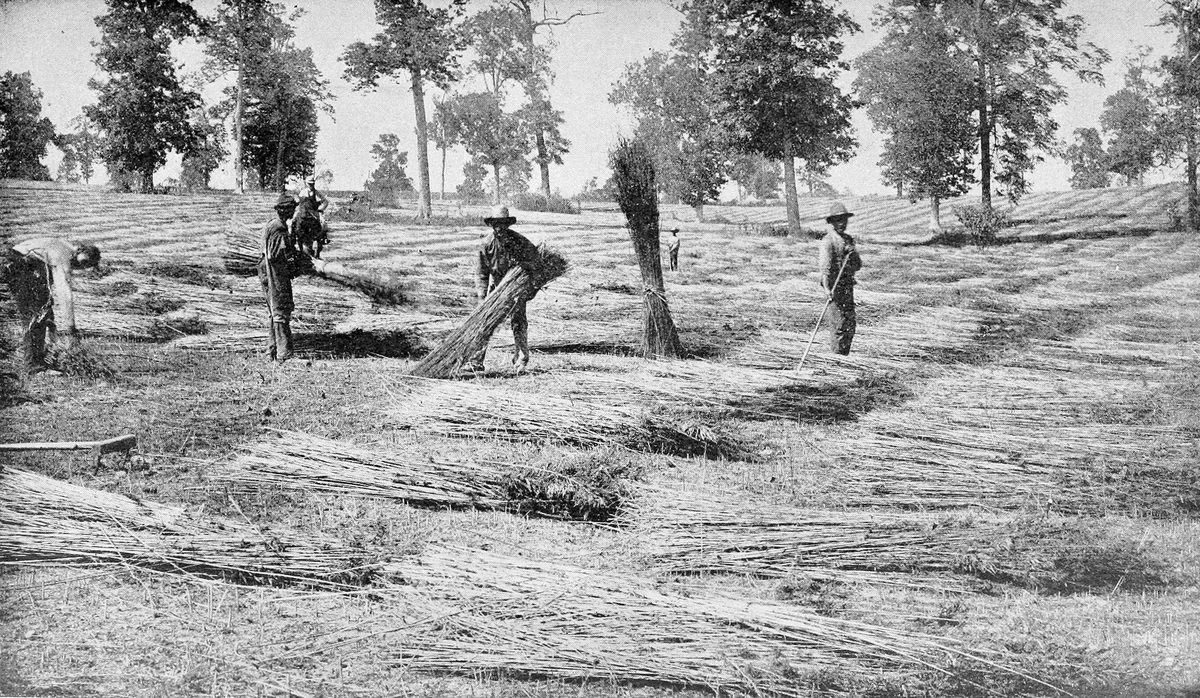
The first commercial hemp crop in American history was planted in 1775 at Clark’s Run Creek near Danville, Kentucky, by Archibald McNeill. Hemp found ideal conditions in the Bluegrass region — rich limestone soil, humid summers, and a long growing season. By the early 1800s, hemp had become Kentucky’s most important agricultural commodity, rivaling tobacco in economic significance.
At its peak around 1850, Kentucky produced 40,000 tons of hemp annually, valued at approximately $5 million. Between 1840 and 1860, the Commonwealth produced three-quarters of all hemp fiber in the United States. The counties of Fayette, Woodford, Shelby, Clark, and Bourbon accounted for roughly 90% of national hemp production by the 1889 census. Hemp remained Kentucky’s largest cash crop until tobacco overtook it around 1915.
Henry Clay’s Ashland
No figure better embodies Kentucky’s hemp era than Henry Clay, the three-time presidential candidate and U.S. Senator who grew thousands of pounds of hemp on his 660-acre Ashland estate in Lexington. Clay’s hemp was processed into rope and cotton bagging — the materials that held the Southern agricultural economy together. He devoted a chapter of his 1837 agricultural textbook to hemp cultivation and actively lobbied for protective tariffs against imported Russian hemp.
Clay secured Navy contracts for Kentucky-grown hemp rope and advocated tirelessly in Congress for hemp protections. His political career was built, in part, on the economic power of the plant. Ashland was both a political headquarters and a commercial hemp operation of enormous scale.
Hemp and Slavery
Kentucky’s hemp industry cannot be understood without confronting the brutality of the enslaved labor that sustained it. More than 120 enslaved people worked at Ashland, and Clay personally purchased over 60 individuals during his lifetime. Hemp processing — breaking, hackling, and spinning the fibers — was among the most physically demanding agricultural work in the antebellum South.
Take away slaves and you destroy the production.
William Bullitt, speech at the Kentucky Constitutional Convention, 1849
Bullitt’s statement was not hyperbole. Hemp production was labor-intensive at every stage, and Kentucky planters relied entirely on enslaved workers to make it profitable. The economic logic was circular: hemp generated wealth, that wealth purchased more enslaved people, and those people produced more hemp.
Lewis Richardson, who escaped bondage in Kentucky, testified before audiences in Canada about his 53 years of enslavement. He bore the scars of 150 lashes. Charlotte Dupuy filed suit against Henry Clay for her freedom in 1829 — 28 years before the Dred Scott decision. She lost her case and was sent to New Orleans for another decade of bondage before Clay finally manumitted her. These stories are inseparable from Kentucky’s hemp heritage.
Decline and Prohibition
The hemp industry declined after the Civil War as enslaved labor was no longer available and imported jute and manila undercut domestic prices. The Marihuana Tax Act of 1937 effectively ended commercial hemp cultivation, and the Controlled Substances Act of 1970 classified all cannabis — including industrial hemp — as a Schedule I substance. For decades, Kentucky’s hemp fields lay dormant.
The Modern Revival
Kentucky’s hemp revival began with a single legislative act. Then-Agriculture Commissioner James Comer championed SB 50 in 2013, declaring hemp a top priority for his department. The following year, Senator Mitch McConnell inserted pilot program language into the 2014 Farm Bill, making Kentucky one of the first four states authorized to grow hemp for research. The program started with just 33 acres in 2014 and expanded to 26,500 acres by 2019.
First U.S. Hemp Crop
Archibald McNeill plants commercial hemp at Clark’s Run Creek near Danville, Kentucky.
Peak Production
Kentucky produces 40,000 tons of hemp annually, valued at $5 million. Three-quarters of all U.S. hemp fiber.
Marihuana Tax Act
Federal law effectively ends commercial hemp cultivation nationwide.
SB 50
Agriculture Commissioner James Comer champions Kentucky hemp legislation.
Farm Bill Pilot
McConnell secures hemp pilot authorization. Kentucky plants 33 acres.
Hemp Farming Act
McConnell authors the Hemp Farming Act within the 2018 Farm Bill, fully legalizing industrial hemp nationwide.
Commissioner Ryan Quarles oversaw the transition from pilot to full commercial production, and his successor Jonathan Shell — a fifth-generation farmer who raised both hemp and tobacco — continued expanding the program. McConnell himself authored the Hemp Farming Act within the 2018 Farm Bill, fully legalizing industrial hemp at the federal level. Kentucky’s advocacy was central to national legalization.
Explore Hemp Heritage
For in-depth cannabis education, dosing guides, safety information, and research summaries, visit our partner site TryCannabis.org
Related on this site: Delta-8 in Kentucky, Federal Hemp Threat, Kentucky Hemp Industry.